

The Dictionary of Sydney was archived in 2021.
Celebration of Anniversary Day to 1900
Citation
Persistent URL for this entry
To cite this entry in text
To cite this entry in a Wikipedia footnote citation
To cite this entry as a Wikipedia External link
Celebration of Anniversary Day to 1900
[media]'Most countries and colonies have their peculiar annual rejoicings, but we know of none', declared the Sydney Morning Herald in 1848, ' ... where a greater abandonment to pleasure and diversion is evinced than in Sydney on the 26th of January.' [1] However extravagant, this boast captured in essence the way Sydney's non-Aboriginal inhabitants celebrated Anniversary Day for most of the nineteenth century.
This annual summer holiday was the official anniversary of the foundation of European settlement at Sydney Cove – the 'birthday of their nation'. [2] But that beginning, as a penal settlement, was problematic. Sydney's newspapers on Anniversary Day sometimes invoked the convict past, but only to emphasise contemporary achievements. Celebrating Sydney crowds eschewed ritual re-enactments of their colony's murky birth for the sunlit possibilities of the holiday at hand.
Celebration in the early decades
Anniversary commemoration had been relatively low key at first, an initiative of the colony's élite. In 1818, Governor Macquarie marked the colony's thirtieth anniversary with greater pomp. There was a 30-gun salute and military review, a dinner for civil and military officers, and, in the evening, a Government House ball. Convicts in government employ were granted a holiday and an extra ration of meat, but a much smaller circle of free colonists were actively involved in the festivities. [3] There emerged as well a counter mode of celebration. Affluent ex-convicts, with their offspring and supporters, organised annual Anniversary dinners to affirm their own attachment to the land in which they lived and to voice their claims for civil and political rights. [4] This pattern of commemoration – private dinners and official receptions, flag-raising and military salutes, even charitable largesse – did little to encourage participation by the people at large.
The Anniversary Regatta
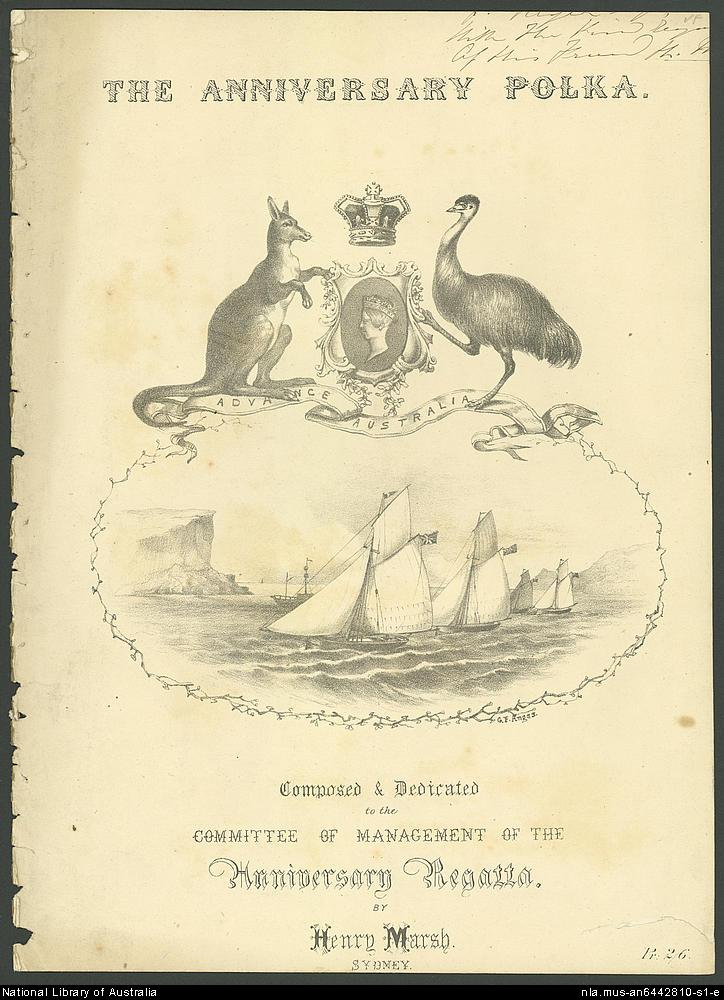
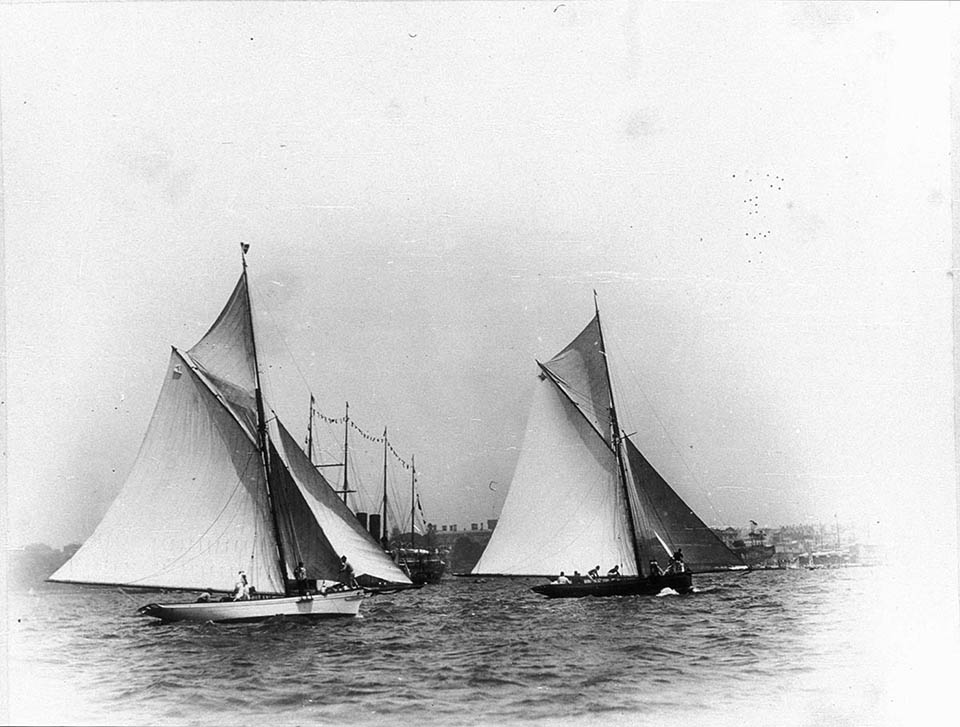
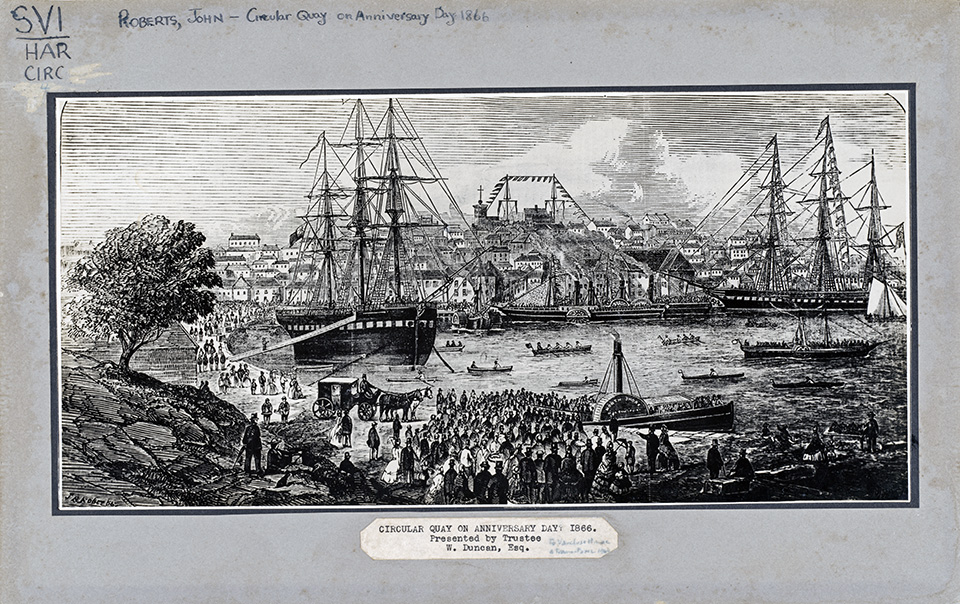
[media]In 1837, however, the first in a long series of Anniversary regattas was organised on Sydney Harbour. This too was an élite affair, but the spectacle attracted onlookers. Before long, the Anniversary holiday was being observed, not just by government departments, but by the large merchant houses and many city shops, freeing employees to join the harbourside throng. [5] As the Herald remarked in 1843, the regatta was an amusement for 'persons of all classes'. [6]
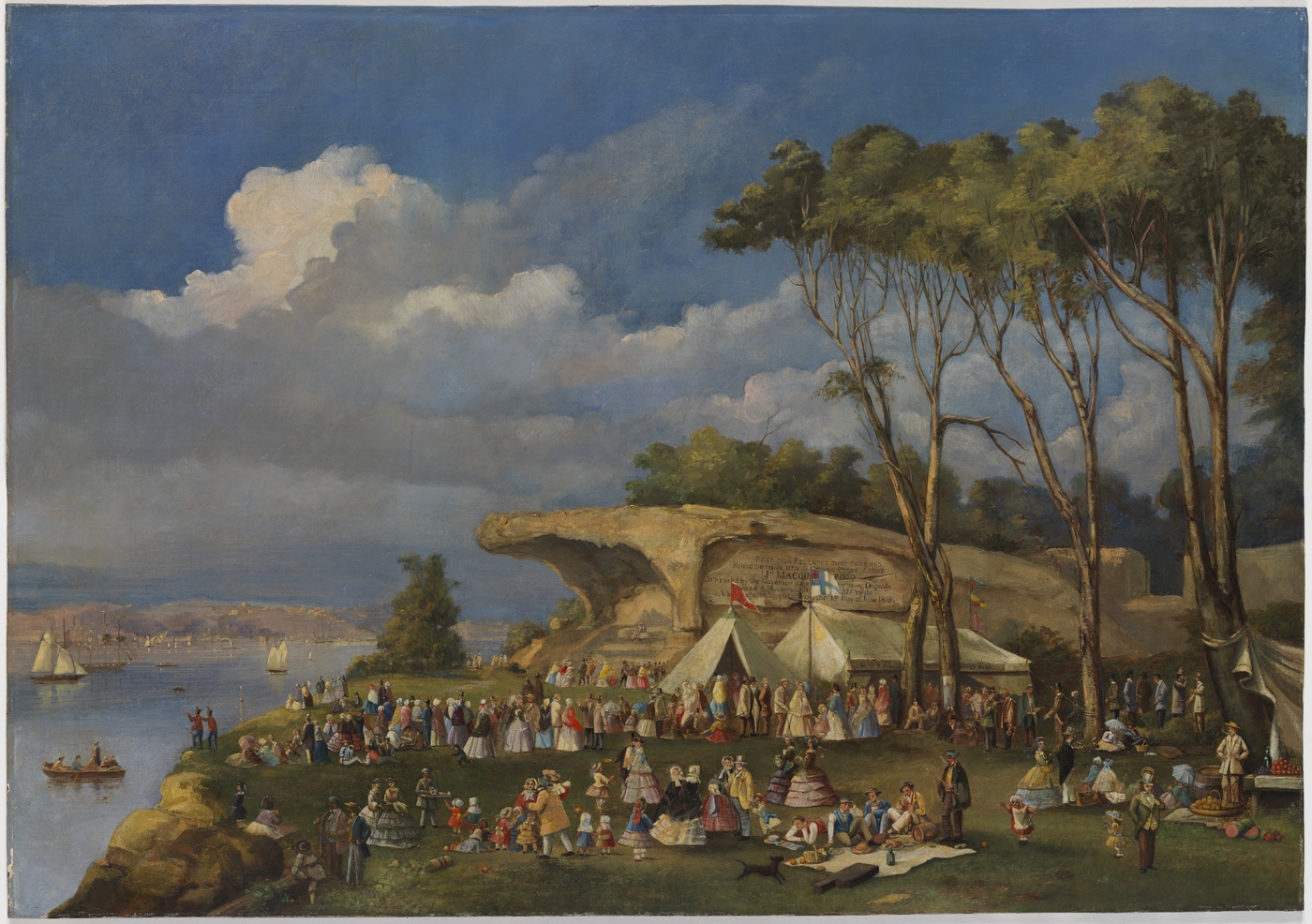
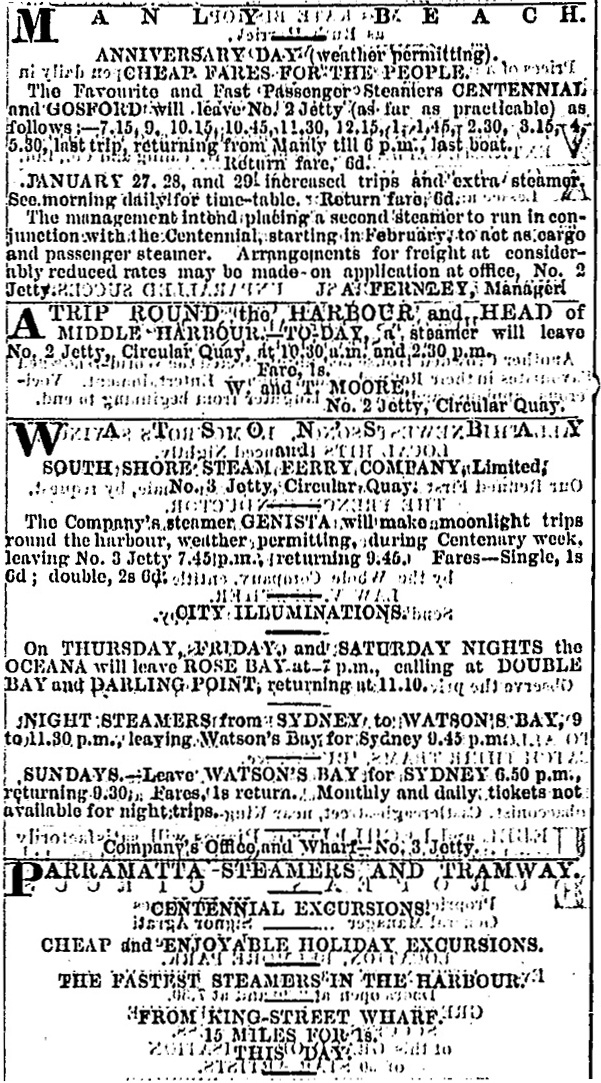
[media]Fort Macquarie, Dawes Battery and Mrs Macquarie's Chair were key vantage points on Sydney Cove. Here victuallers dispensed food and drink from allocated booths, while pie-men hawked their wares among the general foreshore crowds and fraudsters spruiked their dubious games of chance. [7] Steam-packets plying the harbour provided food, music and a better regatta view, and as people re-imagined their Anniversary holiday, vessels also ferried passengers to new picnic destinations. [8] Manly was an early and enduring favourite for people attracted less by boat races than by picnics and fishing on bay and beach.
Other Anniversary activities
In time, enterprising publicans and pleasure ground proprietors provided a wide range of Anniversary entertainment, incidental to the regatta. [9] Manly's Steyne hotel in 1865 offered foot-races and a variety of sports, a minstrel show, a trapeze artist and a German band. Its competitor at Watsons Bay promised a 'menagerie' of 'wild beasts'. [10] For decades, Clontarf Gardens, Balmoral, Cremorne, and the Athol pleasure grounds near Bradley's Head were popular locations for picnics, sports and dancing. [11] Aquariums at Bondi and Coogee were added attractions in the 1890s. [12] Picturesque spots along the Parramatta and Lane Cove rivers enticed holidaymakers too, while many flocked to pleasure grounds at Botany, Brighton or Sans Souci on Botany Bay. [13] More adventurous souls steamed up the coast to Pittwater. [14]
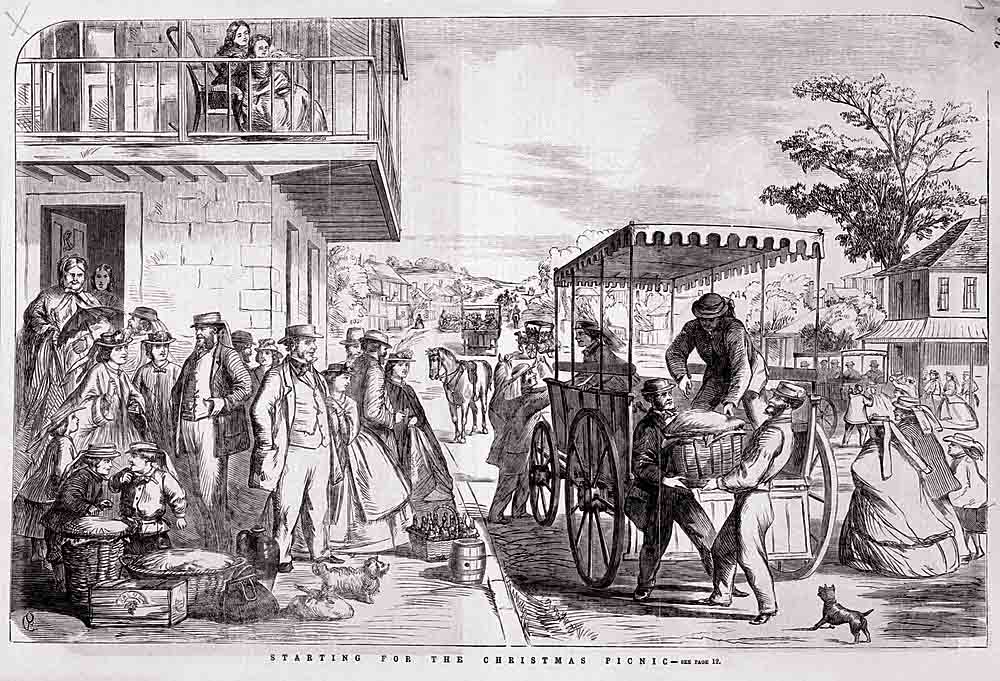
Group excursions were a feature. [15] In 1862 Phillip Street's United Presbyterian Sunday School picnicked at Cremorne. Congregational Sabbath Schools from Waterloo and Redfern went to Birkenhead in 1869. A 'Grand Catholic Excursion' to Balmoral in 1875 was countered by a 'Monster Protestant Picnic' at Chowder Bay the following year. [16] [media]Increasingly, outings were also organised by secular groups whose character reflected broader societal change. [17] The German Association gathered regularly at the Botany Tea Gardens in the 1870s, various friendly societies held processions and sports in the 1890s, and in 1893 wharf labourers picnicked at Chowder Bay. [18]
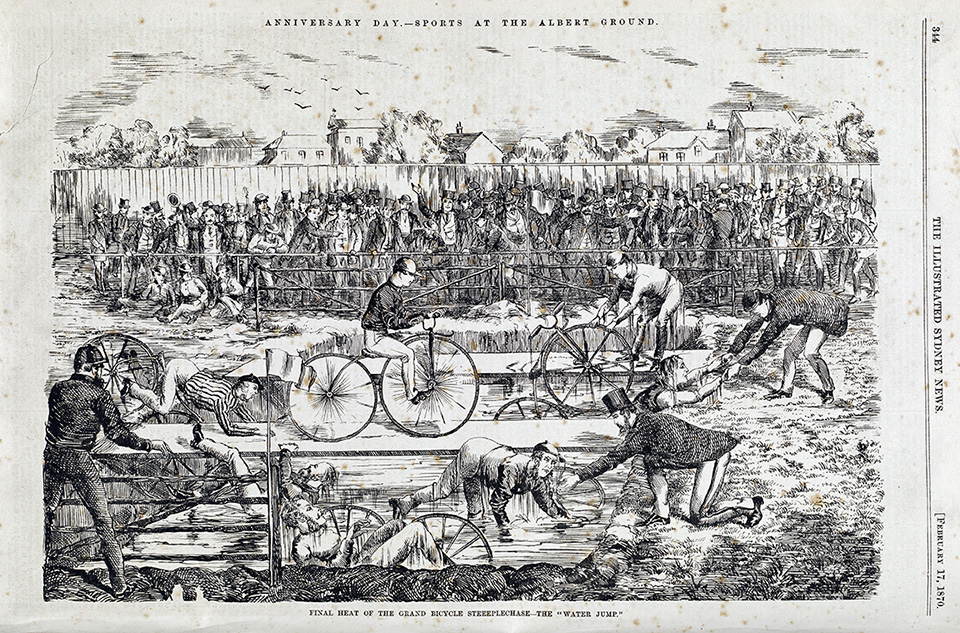
[media]Interclub cricket matches and organised athletic sports were popular too. [19] Thousands watched the hammer-throwing, and the foot, pony and velocipede [bicycle] races at the Albert Ground, Redfern, in January 1869. [20] In the 1880s and 1890s Moore Park's Zoological Gardens also drew large Anniversary crowds.
At night
Occasionally there were fireworks and, more regularly, music and theatre. [21] In 1837 the Anniversary was commemorated at St Mary's chapel with a 'grand performance of sacred music', and the Sydney Mechanics' School of Arts honoured the occasion in 1877 with a 'Grand Musical Festival'. [22] Theatre owners capitalised on the holiday spirit with advertisements highlighting their 'Anniversary Night' performances. [23] [media]In 1850 the Royal Victoria Theatre claimed the patronage of the Regatta Committee and the evening's entertainment was preceded by a prize presentation for best skiff. It was unusual, however, for theatre programs to be especially tailored to Anniversary celebration. The Lyceum Theatre's presentation of The Australian Bunyip in 1857 seems to have been a rare exception, as was the Victoria Theatre's opening number on Anniversary night in 1875: a rendition by Miss Lydia Howard of 'The Southern Cross or 1788', accompanied by 'an emblematic tableaux of Captain Cook'. [24] The spectacle of city buildings patterned by twinkling candles, lamps or gaslight was another tradition, especially honoured on landmark anniversaries such as the Centennial. Public offices glowed with Anniversary emblems in 1888 and 'lines of fire' stretched all the way to Redfern and beyond. [25]
Further out
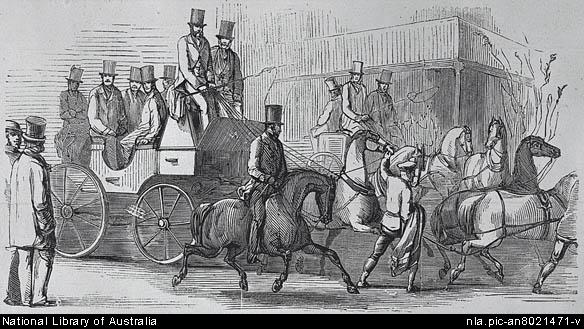
[media]On Anniversary Day in 1861, St Benedict's Young Men's Society travelled by train to Haslem's Creek (now Lidcombe). [26] Railway development from the 1850s opened up new holiday destinations and new diversions for 'the cockneys of Sydney' for whom 'a trip along the line' was said to be 'a real treat'. [27] Excursion fares and special trains encouraged the trend and soon Parramatta and Penrith, Liverpool and Campbelltown, Blue Mountains towns and Illawarra suburbs all began 'to feel the effects of a Sydney holiday'. [28]
[media]Anniversary Day horse races were held at Homebush in the 1840s, Parramatta people attended the regatta by boat and buildings were illuminated after dark. [29] But otherwise scant evidence exists before the 1880s for festivities organised locally in Sydney's hinterland. The deficit of suburban newspapers to report on such activities is probably not the only explanation. In 1885, for example, the Nepean Times lamented that '[a]s usual' there would be 'no [Anniversary] sports in Penrith'. [30]
Three years later, however, the Centennial celebrations inspired pedestrian races in Penrith and a quadrille party at the Temperance Hall. [31] Katoomba and Blackheath organised 'Athletic Sports' that year and in the 1890s concerts, roller-skating and sports amused both visitors and locals. [32] Anniversary horse races were run at Ingleburn in the 1890s, there were cricket matches at Liverpool and Camden, and in 1898 residents in the southern suburbs attended a charity concert at Moorefield racecourse near Kogarah. [33]
Whose national day?
It was not unusual for Anniversary Day to be talked of in Sydney as the birthday – the 'national' day – of New South Wales alone. [34] Other 'colonial nations' celebrated the anniversaries of their own foundations on different dates. [35] Special efforts made in 1888 for intercolonial commemoration reflected the parallel growth of a broader sense of Australian nationhood. Still, it was nearly half a century before Sydney's citizens were joined regularly in celebration on 26 January by people in the other capital cities. [36]
References
Alan Atkinson, 'Review of H. Irving, To Constitute a Nation', Australian Historical Studies, vol 110, 1990, pp 162–63
Alan Atkinson, 'Tasmania and the multiplicity of nations', Tasmanian Historical Research Association, vol 52, no 4, 2005, pp 189–200
J Churchill, Australia Day: A History 1788–1996, Australia Day Council of New South Wales, Sydney, 1996
Anne Coote, '“This is the people's golden day ... dedicated to national enjoyment”: The contribution of Anniversary Day press coverage to the development of national consciousness in New South Wales', refereed paper presented at the Media Traditions Conference , Old Parliament House, Canberra, 2005
Anne Coote, 'Imagining a colonial nation: The development of concepts of sovereignty and nation in New South Wales with particular reference to the period 1856–1860', Journal of Australian Colonial History, vol 1, no 1, 1999, pp 1–37
Ken Inglis, Australian Colonists: An Exploration of Social History 1788–1870, Melbourne University Press, Carlton, 1993
Notes
[1] Sydney Morning Herald, 27 January 1848
[2] Sydney Morning Herald, 27 January 1852
[3] Sydney Gazette, 24 January 1818; Ken Inglis, Australian Colonists, An Exploration of Social History 1788–1870, Melbourne University Press, Carlton, 1993, p 161
[4] Ken Inglis, Australian Colonists, An Exploration of Social History 1788–1870, Melbourne University Press, Carlton, 1993, pp 161-164
[5] 'Public holiday', Sydney Morning Herald, 25 January 1838; Australian, 27 January 1843
[6] 'The Anniversary', Sydney Morning Herald, 27 January 1843
[7] 'Celebration of the fifty-eighth anniversary of the foundation of the colony', Sydney Morning Herald, 27 January 1846
[8] Advertisement, 'Steam-packet Maitland', Sydney Morning Herald, 25 January 1839; Advertisements, 'Anniversary regatta – Excursion on the harbour', 'Anniversary of the colony – for Manly Pier', and 'Anniversary regatta – Steam to Manly beach', Sydney Morning Herald, 26 January 1861
[9] 'Watson's Bay', Sydney Mail, 1 February 1862
[10] Advertisements, 'Manly beach' and 'Watson's Bay', Sydney Morning Herald, 26 January 1865
[11] 'Harbour excursions', Sydney Morning Herald, 27 January 1869; Advertisement, 'Anniversary Day ... Clontarf', Sydney Morning Herald, 26 January 1876; 'Picnics', Sydney Morning Herald, 28 January 1890
[12] 'Bondi' and 'Coogee aquarium', Sydney Morning Herald, 27 January 1891; 'Bondi aquarium', 'Coogee', Sydney Morning Herald, 27 January 1893; 'Bondi aquarium', 'Coogee aquarium', Sydney Morning Herald, 28 January 1895
[13] Advertisement, 'Grand Volunteer picnic' Sydney Morning Herald, 26 January 1875; 'On the Parramatta', Sydney Morning Herald, 28 January 1890; Advertisement, 'Anniversary Day – Sans Souci hotel pleasure grounds', Sydney Morning Herald, 26 January 1866; 'Botany Bay', Sydney Morning Herald, 28 January1861; 'German Association picnic', Sydney Morning Herald, 27 January 1875; Advertisement, 'Sir Joseph Banks Hotel, Botany', Sydney Morning Herald, 26 January 1876; 'Hibernian ACB band picnic and sports', Sydney Morning Herald, 27 January 1900; 'New Brighton recreation grounds', Sydney Morning Herald, 17 January 1888; 'Botany', Sydney Morning Herald, 27 January 1888
[14] 'Broken Bay', Sydney Mail, 1 February 1862; 'Ocean excursions', Sydney Morning Herald, 27 January 1888; 'Ocean excursions', Sydney Morning Herald, 27 January 1891
[15] 'School treat', Sydney Morning Herald, 27 January 1865;'Bourke Street School excursion', Sydney Morning Herald, 27 January 1865; Advertisement, 'Annual excursion of William Street Wesleyan Sunday school', Sydney Morning Herald, 25 January 1877
[16] 'Sabbath school picnic', Sydney Mail, 1 February 1862; 'Birkenhead', Sydney Morning Herald, 27 January 1869; Advertisement, 'Grand Catholic excursion', Sydney Morning Herald, 26 January 1875; 'Chowder Bay', Sydney Morning Herald, 27 January 1876
[17] 'Balmain Workingmen's Association', Sydney Morning Herald, 26 January 1866; Advertisement, 'Grand Volunteer picnic', Sydney Morning Herald, 26 January 1875; Advertisement, 'Anniversary Day ... Trades Hall picnic', Sydney Morning Herald, 26 January 1876; 'Athol Gardens', Sydney Morning Herald, 27 January 1893
[18] 'German Association picnic', Sydney Morning Herald, 27 January 1875; 'German Association picnic', Sydney Morning Herald, 27 January 1876; Advertisement, 'Anniversary Day, German Association', Sydney Morning Herald, 25 January 1877; 'The German Association picnic', and 'Balmain United Friendly Societies annual demonstration', Sydney Morning Herald, 28 January 1878; 'Friendly Society sports at Parramatta' and 'Harbour excursions', Sydney Morning Herald, 28 January 1890; 'Druids' picnic', Sydney Morning Herald, 27 January 1893; 'Illawarra Friendly Societies' demonstration', Sydney Morning Herald, 27 January 1891; 'Chowder Bay', Sydney Morning Herald, 28 January 1895; 'Chowder Bay', Sydney Morning Herald, 27 January 1893
[19] Advertisements, 'Cricket – Albert Club' and 'Cricket – telegram' and 'Orwell v Glebe', Sydney Morning Herald, 26 January 1865; 'Sports on the Albert Ground' and 'Cricket', Sydney Morning Herald, 27 January 1875; Advertisement, 'Young Australians v the Alberts', Sydney Morning Herald, 26 January 1876
[20] 'Albert recreation ground', Sydney Morning Herald, 27 January 1869
[21] 'Fireworks at university grounds', Sydney Morning Herald, 26 January 1888; 'Alhambra', 'Town Hall', 'Her Majesty's Theatre', 'Lyceum Theatre', 'Criterion Theatre', 'Theatre Royal' and 'Imperial Opera House', Sydney Morning Herald, 27 January 1893
[22] 'Domestic Intelligence', Sydney Herald, 26 January 1837; Advertisement, 'School of Arts', Sydney Morning Herald, 25 January 1877
[23] Advertisement, 'Royal Victoria Theatre', Sydney Morning Herald, 27 January 1851; Advertisement, 'Prince of Wales Theatre', Sydney Morning Herald, 26 January 1865; Advertisement, 'Victoria Theatre', Sydney Morning Herald, 26 January 1875
[24] 'Victoria Theatre', Sydney Morning Herald, 26 January 1875; 'Osric' [H Hall and AJ Cripps], The Romance of the Sydney Stage, Currency Press, Sydney, 1996, p 296
[25] 'The Jubilee', Sydney Gazette, 30 January 1838; Editorial, Australian, 28 January 1841; 'Illumination of the city', Sydney Morning Herald, 28 January 1868; 'The Illuminations', Sydney Morning Herald, 27 January 1888
[26] 'St Benedict's Young Men's Society', Sydney Morning Herald, 28 January 1861
[27] 'The seventy-seventh anniversary of the colony', Sydney Morning Herald, 28 January 1865
[28] Advertisement, 'Great Southern, Western and Richmond Railways', Sydney Morning Herald, 28 January 1865; 'The seventy-seventh anniversary of the colony', Sydney Morning Herald, 27 January 1865; 'Railway excursions', Sydney Morning Herald, 27 January 1869; 'Anniversary Day', Katoomba Times, 29 January 1892; 'Local notes', St George Observer, 28 January 1899
[29] Editorial, Australian, 27 January 1845; 'The Draper's Club Races', Sydney Morning Herald, 28 January 1845; 'The Draper's races', Parramatta Chronicle and Cumberland General Advertiser, 1 February 1845; Advertisement, 'Steamer “Comet', Parramatta Messenger, 23 January 1847; 'The anniversary', Parramatta Messenger and Cumberland Times, 30 January 1847
[30] 'Anniversary Day', Nepean Times, 24 January 1885
[31] Advertisements, 'Centennial celebration', and 'Centennial quadrille party', Nepean Times, 21 January 1888
[32] Advertisements, 'Katoomba athletic sports' and 'Blackheath sports', Nepean Times, 21 January 1888; 'Blackheath', Katoomba Times, 1 February 1890; 'Anniversary Day', 'Band of Hope', 'Cricket', and 'Skating', Katoomba Times, 31 January 1891; 'Anniversary Day', 'Wentworth Falls sports' and 'Skating carnival, Katoomba Times, 29 January 1892; Advertisement, 'Grand concert', Katoomba Times, 20 January 1894; 'Blackheath', Katoomba Times, 2 February 1894; 'Lawson', The Mountaineer, 1 February 1895; 'Cricket' and 'Concert at Blackheath', The Mountaineer, 31 January 1896; 'The holiday', The Mountaineer, 31 January 1896; 'The holiday', The Mountaineer, 27 January 1899
[33] Advertisement, 'Grand moonlight continental', St George Observer, 21 January 1899
[34] 'Sixty-first Anniversary regatta', People's Advocate, 27 January 1849; 'The sixty-fifth anniversary of the colony', People's Advocate, 29 January 1853; 'The celebration of the anniversary', Empire, 27 January 1851; 'The anniversary of the foundation of the colony', Empire, 27 January 1852; 'The anniversary', Empire, 26 January 1853,'Our manhood', Empire, 26 January 1856; 'Seventy-third anniversary of the colony', Sydney Morning Herald, 26 January 1861; Editorial, Sydney Morning Herald, 26 January 1864; Editorial, Sydney Morning Herald, 26 January 1876; 'Skating carnival', Katoomba Times, 29 January 1892
[35] A Atkinson, 'Review', Australian Historical Studies, vol 110, 1990, pp 162–63; A Atkinson, 'Tasmania and the multiplicity of nations', Tasmanian Historical Research Association Papers and Proceedings, vol 52, no 4, 2005, pp 189–200; Ken Inglis, Australian Colonists, An Exploration of Social History 1788–1870, Melbourne University Press, Carlton, 1993, pp 167–176; A Coote, '“This is the people's golden day ... dedicated to national enjoyment”, The contribution of Anniversary Day press coverage to the development of national consciousness in New South Wales', paper presented at the Media Traditions Conference , Old Parliament House, Canberra, 2005; A Coote, 'Imagining a colonial nation, The development of concepts of sovereignty and nation in New South Wales with particular reference to the period 1856–1860', Journal of Australian Colonial History, vol 1, no 1, 1999, pp 1–37
[36] J Churchill, Australia Day, A History 1788–1996, Australia Day Council of New South Wales, Sydney, 1996, p 8